
When strengthening operations means changing the structure
We’ve all heard it, read it, and seen it on countless infographics: we in the development sector need to shift power.
But is anyone actually shifting power? And if so, did it work? What are the options for different kinds of structures? How long does it take?
Here’s one example of an organization that decentralized their organizational structure, moving from one headquarters location in the U.S. to a regional networked model, where each region has autonomy and yet is part of a coordinated whole.
Situation
The International Center for Research on Women (ICRW) is a nearly 50-year-old nonprofit focused on advancing the rights and opportunities of women, girls, and structurally excluded populations through evidence-based solutions.
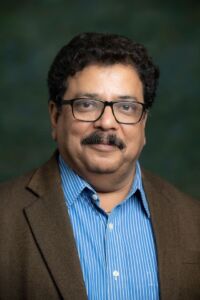
Ravi Verma, Director of ICRW Asia, encapsulated the organization’s ethos: “ICRW has always worked in the local context while creating a global narrative. It’s in our DNA.”
Given that legacy and the nature of their work (a deep regional presence with a global community of researchers), combined with the changing ecosystem, ICRW leaders had been talking for many years about the need to change their structure from having one headquarters in the United States to a decentralized structure with operations in Africa, the Americas, and Asia—each operating with equitable authority and independent boards under a shared mission, vision, and strategic priorities.
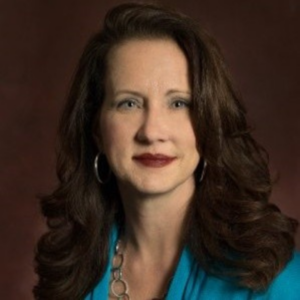
In 2022, the conversations crystalized into action as a strategy in the three-year plan. In 2023, Ann Warner joined as interim CEO and worked closely with leadership in the Africa and Aisa offices, as well as with the boards, to develop a more detailed action plan.
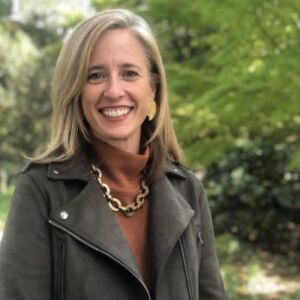
“We see this often: the resource challenge—who will do the transformation work when everyone is fully busy doing program work? And how do you map out all the steps, from legal to financial to just day-to-day who’s going to what when, and how,” said Kim Kucinskas, Director of Global Initiatives for Humentum. “Some of the challenges are technical and many are mindset. None of them are straightforward.”
Challenges
1. Structural Complexity:
- Decisions about the size and role of headquarters, shared costs, and funding responsibilities.
- Fiduciary risk and financial planning that balances global and regional needs.
- How to present a cohesive organization to stakeholders while each region makes their own decisions.
- And a multitude of technical issues, like reporting financials in multiple countries.
2. Resource Constraints:
Much of ICRW’s revenue was in the form of restricted grants that couldn’t sustain the complexity of a multi-year transformation (for organizational change processes, general operating or capacity-building funds are necessary).
3. Process and Implementation:
While the staff and leaders were motivated by the ‘why’ and had a strategy (the ‘what’), there was no clear pathway to implementation (the ‘how’). In other words, there was no detailed plan around how to staff, equip, and sustain the changes.
Five fundamentals for success
In any type of structural reorganization, how does an organization set itself up for sustainable mission delivery?
- Put it in the strategy. And make it more than a high-level, aspirational statement. “Define success,” said Ann Warner, CEO. “As you get into the process, you’ll find yourself deep into the weeds on some things and then it’s helpful to pull up and say, ‘OK, this is what we defined as success. Here’s what we said is most important. Are we there or are we not there?’”
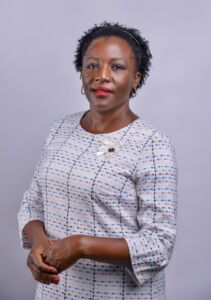
- Get full buy-in from the board. “I wouldn’t say that they were all at the same place when we started,” said Evelyne Opondo, Director of ICRW Africa, “but they all ended up in the same place. There was that continuous conversation bringing them along to understand why this was critical.”
- Understand the donor landscape for your specific type of organization. What are their expectations, what are their challenges, what are they funding?
- Reflect on (and possibly refresh) your values. Before digging in, ICRW worked through their values. “Really having that introspection and asking ourselves, what do these values, like equity, mean for us in practice beyond the technical work in terms of ways in which we work. What do they mean?” said Opondo.
- Bring in expertise that’s not emotionally invested in the outcome. After getting the process to a certain point, leaders at ICRW knew they needed outside expertise. “It can be challenging to liberate yourself from the day-to-day kind of working realities,” said CEO Ann Warner. “We knew that nobody who was deeply embedded in the organization would be as neutral and as effective at moving us forward as an outside facilitator would be.”
After going through a thorough RFP process, the leadership team chose Humentum.
“We knew that they had been doing a lot of work around sense-making in the sector,” said Warner. “Even prior to all the monumental changes that occurred in 2025, they were already providing thought leadership and convening power around these questions.”
The Humentum team also had experience in how to refine governance frameworks, clarify resource-sharing models, and develop a practical change management plan to keep staff engaged and increase their adoption of the plan.
“We knew they had a broader view of what was happening in the landscape and that we could benefit from the knowledge and the experience,” said Opondo, “I think the other thing was also just the fact that we knew they could tap into a rich network of expertise.”
The Work
The goal of this type of decentralization was to make sure that the new model would boost business performance, foster a cohesive workplace culture, and reinforce overall organizational effectiveness.
“ICRW had been working on their decentralization process for many years,” said Kim Kucinskas. “They brought us in to help them do the final operationalization—that last sprint where they put their ideas into action.”
Using the Humentum Consultancy methodology, the team worked with leaders and stakeholders at ICRW in three phases over a six-month period.
Engage & Analyze
Given all the work ICRW had already done, the first step was to map and do a “desk review” to assess the current state of the process and identify key barriers and potential risks. The team reviewed governance, finance, collaboration, standards, and values and then provided a final report, identifying six thematic areas to address in the subsequent work.
Implement
With a solid understanding in place, the team used a collaborative prioritization process with the ICRW Task Force to build a comprehensive workplan with milestones, roles, and timelines for the entire restructuring process.
Sustain & Amplify
Moving from a plan into the work itself, the Humentum team facilitated sessions to shape governance and operational models based on a synthesis of outputs from a variety of workshops and individual stakeholder recommendations done in the first phase. The sessions resulted in short, practical reports and then engaged leadership and staff in task forces around three themes on how to move forward around:
- Financial Modeling
- Governance Landscape Analysis
- Decision-making and a fiduciary matrix
The last part of this phase was to pull all those outputs together and facilitate alignment across staff, leadership, and regional boards on key design elements. Rather than delivering reports to leadership, the Humentum team led an interactive session to present the findings and talk about the recommendations with designated “change champions.” Those champions then in turn delivered the recommendations to their teams.
The deliverables included:
- Final recommendations for key operational and governance changes
- Collaborative Principles
- Budget Parameters
- Terms of Reference for the new Global Coordinating Unit
- Policy requirements and analysis
- Adaptive change management plan
- Network Collaboration Agreement
Results
At the beginning, said Opondo, “there was a commitment, there was a desire, but there was also a lot of lack of clarity on how you move from step one to step two. What will it look like? How do we share the power? The main difference is that it’s now formalized. We are much clearer, in terms of governance, on what it is that unites us still as a global organization and yet allow us to be autonomous.”
“We are still in the process of implementing what we have developed together with the help of Humentum,” said Ravi, “but there is a clarity around what we are going to do and how we are going to do it.”
“We’ve moved very far along. There are still some decisions that have to be made, but we were able to make a ton of progress with Humentum’s help and fully thinking through the options, looking at other partners in the field and what they’re doing and having the confidence that we have Identified a model that’s going to work for ICRW,” said Warner. “This is going to be a learning process. This isn’t a plug and play situation with completely predictable results. This is a new model, and we want to have a learning approach to it as we go.”
Considering a structure change, merger, or closure this year? Humentum consulting can help guide you through the process.