Home Blog & Media From privilege guilt to purpose: My unlikely journey developing a nonprofit accounting standard

From privilege guilt to purpose: My unlikely journey developing a nonprofit accounting standard

September 12, 2025

Share this Post

Author

Samantha Musoke

Director, INPAS Adoption
Humentum

Like most of my friends, I first became aware of social justice causes in my early teens. My concern and knowledge continued to grow as I got older, but the impact of poverty and inequality struck me in a far deeper way when I spent six months working and traveling in India before university.

I came home to my comfortable London life with what I now recognize as “privilege guilt.” At the time, I had no words for it—only a nagging conviction that my future should somehow be spent doing something meaningful and helpful. But what? I had no idea!

I went to graduate recruitment fairs and learned one thing for certain: I would not become a management consultant, banker, or accountant. Perhaps I could try to make a difference by working for an NGO, or running a rural hospital in the developing world?

I applied for the graduate training scheme of the National Health Service (NHS) and got a job in a hospital, until a tiny advert in The Guardian set me on a different path. After three residential weekends of intense training, and fundraising efforts spread over six months, I joined Health Projects Abroad (HPA) as a volunteer in rural Tanzania. I could write an entire book about those pivotal three months. We all learned and gained and gave so much, and my sense of purpose found a direction—I wanted to work in Africa.

While in East Africa, a friend of a friend arranged for a week-long visit to Kagando Hospital on Uganda’s border with the DRC. But at 23, I uncovered a sobering truth: the staff there were doing a phenomenal job under intense pressure. They were understaffed and under resourced, but they didn’t need me. I had no useful skills to offer, and even the NHS scheme didn’t feel relevant.  Disheartened, I returned to Kampala, Uganda.

An unexpected twist

My host there was a remarkable man who had founded four accounting firms across East Africa in the 1970s, primarily to meet the needs of smaller businesses, NGOs, and churches. He persuaded me that accountancy could be a powerful tool for service, and there was an acute need for accountants in Uganda at that time.

To my own surprise—and mild horror—I applied for a graduate trainee post with Mazars in Surrey, UK, so that I could return with the necessary qualifications. 

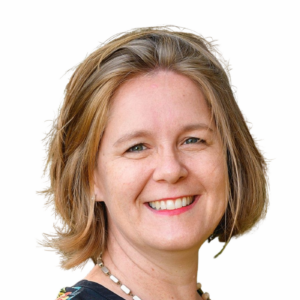
Sam Musoke Director, INPAS Adoption

I still remember the final exchange in my interview with the partner, a warm man in a gray suit and gray tie combo, as I regretted my own outfit choice: a purple suit with a yellow shirt.

“Are you really sure you want to be an accountant, Sam?” 
“Yes! I very passionately want to work in Africa after I qualify.”   
“Very well, we do have a space. Would you prefer to specialize in tax or audit?” 
“Oh. What’s audit?” 

From 1997, I trained in London and Surrey, mostly auditing clients that were small businesses, churches, and charities. I became fluent in the then-new UK Charities SORP (Statement of Recommend Practice) and, much to my astonishment, found I loved accountancy. A serious skin cancer diagnosis and subsequent surgery resulted in my doctor advising against living on the equator, but it had the opposite effect—my sights stayed firmly fixed on Uganda.

In 2001 I finally flew out on a one-way ticket—naïve, idealistic, and ready to learn. Thanks to HPA’s thoughtful training in Tanzania, I was acutely aware of the self-important patronizing “white savior” mentality, and the treacherous boundary between that and “a white person’s desire to be useful in Africa.” I certainly made mistakes, and am grateful to the many wonderful Ugandan colleagues, friends and family members who welcomed me, corrected me, and continue to inspire me.

When the numbers don’t add up 

In my first week as an auditor in Uganda, I reviewed over ten sets of financial statements from nonprofit organizations. I was baffled by what I found:

  • Some showed a perfect zero bottom line, achieved by pushing unspent income into the next year.
  • Others listed capital purchases as expenses and as balance sheet assets.
  • Some didn’t balance at all.
  • Many included annexes of project or grant accounts that bore no relation to the main statements – and no reconciliations or workings on file either!

So what? Why did my questions and confusion matter? Looking at the numbers on the page, my international eyes didn’t trust them. And distrusting the numbers led to doubting the organizations I had never even met, to the point of wondering if they were lacking in competence or even trying to hide something. 

Sam Musoke Director, INPAS Adoption

Later, listening to nonprofit finance officers, it made more sense. Every nonprofit is different, but there was a frequent thread in their stories that went something like this:

“We raised the money, we spent it properly doing important work, and we kept good records. The auditors made all those adjustments for deferrals, depreciation, funds, and accruals. They said that’s the way it has to be done. Hopefully someone else understands our financial statements because they don’t mean much to us!” 

Later still, I would discover that donors also often find they can’t make sense of nonprofits’ audited accounts. Reports from Angola, Argentina, and Afghanistan are all different from each other. At best, they serve as a box-ticking exercise during due diligence: clean audit opinion? Tick. At worst, they serve as a source of distrust.

The bitter irony is that inconsistent financial statements—designed to build trust and transparency—instead undermine confidence. To fill the gap, donors often require their own separate audits for each grant, with different formats and compliance hoops. Albeit well intentioned, this approach is inefficient and ineffective, locks out many local organizations, and feeds the power imbalance that undermines the language of “partnerships” between funders implementers.

A global problem with no clear solution 

Embarrassed that I had not thought about this before, I asked colleagues which standards applied to Ugandan nonprofits. They answered, “International Financial Reporting Standards,” written for profit-oriented companies.  But what was the alternative? Nonprofit audit reports from our firm often carried the formally phrased but fundamentally flimsy opinion: “These financial statements present a true and fair view in accordance with generally accepted accounting practice.” But which specific accounting framework? Defined and accepted by whom?

The international accounting standards simply weren’t designed for nonprofits. Countries like the UK, USA, Switzerland, and Australia had developed guidance for their domestic purposes, but 92% of countries went without, leaving their nonprofits at a disadvantage.

It was another quiet injustice of global inequality. But there was nothing I could do about it. Or any single audit firm, nonprofit, or even donor.

Sam Musoke Director, INPAS Adoption

Building a movement for change

In 2004, I joined Humentum (then Mango) as a part time financial management facilitator and continued to hear from nonprofits bemoaning the lack of harmonization and usefulness of financial reports.

Beyond audit and training, over the following years I had the intense privilege of working with or for nonprofits across Africa – doing internal audits, policies and systems development, donor assessments, capacity building, fraud investigations, training courses, and leadership and governance roles. (And I got married and had children along the way.)  From every angle, the issue of inconsistent accounting treatments and reporting formats was a constant problem, which threw up many other symptoms, but there was no solution in sight.

I wasn’t alone. With others around the world, over many years, Humentum created and joined bigger conversations on related challenges such as duplicative audits, burdensome due diligence, and the sector’s apparent allergy to “overhead costs.”  In 2018 we started gaining traction with the idea of a new standard.

By 2019, the IFR4NPO (International Financial Reporting for Non Profit Organizations) project was born in a long lasting and synergistic partnership with Humentum and CIPFA (the Chartered Institute of Public Finance and Accountancy) and backed by visionary support from The Ford Foundation and The Open Society Foundations. In the “engine room” of the standard development process were national accounting standard setters from every continent, and advisors from nonprofits, donors, and auditors all over the world, as well as positive engagement from the International Accounting Standards Board (IASB).

As Director, INPAS Adoption for Humentum, my role centers around amplifying voices and harnessing the collective agency of our stakeholders – both the nonprofits affected by the current dysfunctional system, and those with the influence to support change. A movement was built – over 15,000 people in 170 countries.

What an honor to play a part in creating the world’s first international accounting standard for non-profits, alongside an army of volunteer country champions in 50 countries! They all know this is not a dry technical endeavor, but a vital matter of combatting inefficiency and injustice.

Six years later, that long-held dream is within reach. In October 2025, the International Non-Profit Accounting Standard (INPAS) will be published, along with a Practice Guide for Harmonized Grant Reporting.

 This journey so far has required creativity, collaboration, and courage. I can’t wait to see the next phase unfold as INPAS gets used. That’s when the benefits will be felt, at home by nonprofits and auditors in Uganda, and by the entire nonprofit sector around the world.

Sam Musoke Director, INPAS Adoption

It is said: “If you love your work, you’ll never work a day of your life.” Seeing INPAS come to life has continued to ignite that passion and purpose for me – and we are only getting started.


Join the global movement in adopting INPAS for a more transparent, credible, and accountable nonprofit sector. We celebrated our virtual launch event on October 9 – rewatch the recording here. 

Learn more about INPAS