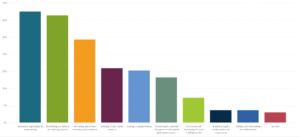
But the lack of reserves isn’t a question of capability—it’s a reflection of structural realities. When most funding is restricted or short-term, even the most capable organizations are forced to focus on survival rather than sustainability.
3. Compliance burdens are draining resources
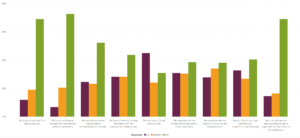
Across the board, CSOs are managing complex compliance requirements that often divert time and resources away from program delivery. Only 30% say they’ve advocated for relief or reform, often due to fear of jeopardizing funding relationships.
For many, the burden of reporting—especially when working with multiple funders—is growing heavier. This is particularly acute for smaller organizations, which may not have dedicated compliance teams or systems in place.
4. Capacity strengthening is consistently underfunded
The data paints a stark contrast between organizational goals and the resources available to achieve them. Index respondents consistently articulated the link between organizational capacity and program effectiveness. However, fewer than 40% of organizations maintain a risk register and fewer than half have developed a monitoring, evaluation, and learning (MEL) strategy or comprehensive management plan.
The culprit? Structural starvation. Respondents acknowledged that “most funding goes to project delivery,” and they “lack unrestricted funding for institutional capacity building.”
Ironically, the greatest organizational capacity gaps are often in financial management, risk management, and monitoring and evaluation. Those are precisely the areas that funders evaluate when making funding decisions, yet the way they provide funding is creating the problem.
5. Equity is prioritized externally, while internal equity remains under resourced
Values-driven and equitable work is a top priority for CSOs, and the results show that they consistently prioritize accountable, community-led program delivery. Over 80% of respondents ensure their programs are equitable and inclusive, and over 70% include gender equity as a key component of program design.
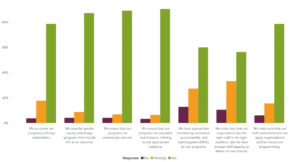
However, this external focus on equity often isn’t matched by investment in internal equity. Organizations struggle to resource equity work within their own operations—from recruiting diverse talent and providing equitable compensation to creating inclusive workplace cultures.
One indigenous NGO shared that they “face challenges in offering equitable salaries and benefits due to limited resources and funding constraints. [Their] reliance on project-specific grants and donations, which often restrict fund usage to direct program expenses, limits [their] ability to allocate funds toward competitive compensation.”
This makes it clear that the problem isn’t lack of commitment but lack of flexible resources.
6. True partnership is still missing from most funding relationships
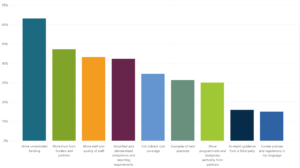
Nearly half of respondents identified lack of trust from partners and funders as a significant barrier to achieving their goals. This trust deficit manifests in multiple ways: restrictive reporting requirements, limited decision-making autonomy, short funding cycles that prevent long-term planning, and communication patterns that position CSOs as implementers rather than local experts.
One respondent put it bluntly: