

Three patterns that lead to failure and a six-step process for success
Why restructures go wrong
Organizations restructure for all sorts of reasons. A new strategy or growth plan. An economic downturn that squeezes every budget line. A major funder walking away. In the social good sector right now, it’s often more than one factor happening at one time.
The trigger is rarely the problem. How the restructure is handled usually is.
I’ve sat in a lot of rooms where a new org chart was unveiled. The boxes were neat, lines were clear, and within six months, half the people in those boxes were quietly looking for the exit.
Restructures rarely fail because the chart is wrong. They fail because the chart was the first thing anyone drew.
I see three patterns again and again:
- Starting with the answer. The new structure is designed before anyone has agreed what problem it’s meant to solve.
- Treating structure as the whole job. The boxes change. Governance, pay, systems, and ways of working don’t. The new structure runs on old wiring.
- Forgetting the people. The plan shows the new structure but not how people get there: those moving into new roles, those leaving, and those left behind to make it work.
None of this is about bad intentions. It’s about skipping steps.
Do the thinking first
Humentum’s BRIDGE methodology was built for complex organizational change, and it’s one of the most useful models I’ve found for restructuring. It has six phases:
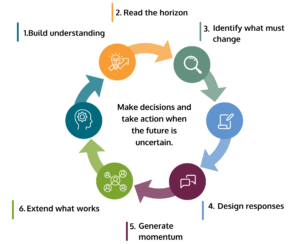
- Build understanding. Make sense of what’s actually going on, not the leadership team’s assumptions about it.
- Read the horizon. Look ahead at funding, partnerships, and where the sector is heading. A structure built for last year’s problems is out of date on launch day.
- Identify what must change. Name the tensions and trade-offs out loud. What are you prioritizing, and what will you let go of?
- Design responses. Turn those priorities into practical action.
- Generate momentum. Test, learn, and adjust as you go.
- Extend what works. Embed it and share it.
Most restructures jump straight to phase 4. The first three are where the real work happens.
BRIDGE also looks across the whole operating model, not just structure. In Humentum’s framework, structure sits alongside leadership, governance, culture, talent, compensation, systems, risk, and funding. Pull on one and you’re pulling on all the others.
Then, design the ‘seats’
Once you know what must change, you can design a structure to deliver it. This is where I find the Accountability Chart from EOS (the Entrepreneurial Operating System) genuinely useful. (Humentum runs on EOS itself, so the two fit together more naturally than you might expect.)
The principle is simple: design the seats before you put names in them. Most restructures do it the other way round. Work out the functions the plan needs over the next year or two, and what each seat is accountable for. Only then ask who should sit where.
That’s where “right people, right seats” comes in:
- Right people share your core values.
- Right seat means (in EOS terms) they Get it, Want it, and have the Capacity to do it (GWC). In plain language, they understand the job to be done, they have energy to do it, and they have the skills needed.
- All three matter. Someone who gets the role and has the capacity but doesn’t want it will struggle. So will the loyal colleague who wants it badly but doesn’t have the skills yet.
Working this way is uncomfortable. It surfaces seats nobody fits, and people who don’t fit any seat. But it’s honest. And even a well-designed structure is still a proposal, which brings me to the part most restructures get wrong.
Bring people along with you
A structure is just a drawing until people walk into it. This is the part that decides whether a restructure works, and it’s the part that gets the least planning.
- Communicate early and honestly. Tell people in person, before the rumor mill does it for you and before you have all the “right” answers. Brief managers first so they’re not hearing it alongside their teams. Say what you know, what you don’t, and when you’ll know more.
- Treat people as individuals. The same announcement lands very differently on the person with a new mortgage, the person on maternity leave, and the person who’s been half-looking for a new job anyway. One-to-ones matter far more than the all-staff email. (And who reads emails thoroughly or understands the words as they were meant to be?)
- Consult genuinely. Consultation isn’t telling people what you’ve decided and asking how they feel about it. It has to happen while proposals can still change: in BRIDGE terms, while you’re identifying and designing, not after the chart is signed off. In many countries it’s also a legal requirement, and the rules vary a lot. Make sure you know and follow the local laws on consultation wherever your people are based and take local advice if you’re not sure.
- Help people leave with dignity. If roles being eliminated, look properly at suitable alternatives, and check what extra protections apply locally, particularly for people who are pregnant or on family leave. Give real support with the job search: time, references, practical help. How people leave an organization is watched very closely by everyone who stays.
- Look after those who stay. Survivor guilt is real. So is the extra workload nobody mentions. Don’t launch the shiny new structure the week after colleagues have gone. Acknowledge the loss first, then check the new seats are actually workable, not just well drawn.
Make it stick
Most restructurings are announced as finished. As if nothing will change once the new charts have been shared. That’s exactly when they’re most fragile.
That’s where BRIDGE’s last two phases earn their keep. Test the new way of working, learn from it, and adjust. Then embed what works, so it becomes how you operate rather than a one-off project.
In practice, that might mean a 90-day check-in on every new seat, using GWC again. It means asking people what’s harder than it should be and fixing it, and it means being willing to admit when part of the design was wrong.
A good restructure isn’t a new organizational chart. It’s the thinking before it, the care during it, and the follow-through after it.
Facing a restructure? Humentum members get access to the tools to put BRIDGE into practice, built for the social good sector, plus a peer community of people who’ve been through it.
Find out more about membership
For support tailored to your organization, Humentum’s global consultancy team works alongside leaders through every phase.